Our Services
Mansafe Systems PPM for commercial premises
Why Mansafe System PPM matters
Fall protection systems are, by their nature, only called upon when something has the potential to go wrong — a slip, a trip, or simply the ongoing risk of working at height. That makes them one of the least forgiving categories of building equipment when it comes to maintenance: a corroded anchor point or a worn latchwire cable may show no obvious sign of weakness during everyday use, yet fail at the exact moment it’s relied upon to arrest a fall.
The legal framework centres on the Work at Height Regulations 2005, which require employers and those in control of work at height to ensure that equipment used for work at height, including fall protection systems, is appropriately inspected, maintained, and kept in good working order. The Provision and Use of Work Equipment Regulations 1998 (PUWER) impose further duties around the suitability, maintenance, and inspection of work equipment more generally. Technical standards provide the detail behind these duties: BS EN 795 sets requirements for anchor devices, BS 7883 provides a code of practice for the selection, use, and maintenance of anchor and anchor line systems, and BS 4211 covers the design, construction, and maintenance of fixed ladders and their safety provisions. Manufacturer-specific certification and testing requirements also apply to proprietary latchwire and rail-based fall arrest systems.
Because these systems are installed specifically to protect life during otherwise routine access, keeping them in certified, verified working order isn’t a discretionary maintenance task — it’s a fundamental part of enabling safe work at height across the building.
Core mansafe PPM tasks
A comprehensive mansafe PPM programme typically includes:
Annual system inspection and re-certification
A full inspection carried out by a competent, trained inspector, confirming the system remains fit for purpose and issuing updated certification
Anchor point testing
Proof load testing or visual/mechanical inspection (in line with manufacturer and BS 7883 requirements) to confirm anchors remain securely fixed and free from corrosion, cracking, or fixing failure
Cable, rail, and component condition checks
Inspecting latchwire cables, rigid rail systems, and their end fixings, intermediate brackets, and tensioning devices for wear, corrosion, and correct tension
Handrail inspection
Checking fixings, welds, and structural integrity for signs of corrosion, movement, or damage, and confirming handrails remain at the correct height and continuous along their intended run
Fixed vertical ladder inspection
Checking rungs, stiles, fixings, and any integrated fall arrest rail or cage for corrosion, security, and compliance with current spacing and safety cage requirements
Labelling and signage checks
Confirming safe working load information, system identification, and any usage restrictions remain clearly displayed and legible
User equipment compatibility checks
Confirming the system remains compatible with the personal protective equipment (harnesses, lanyards, fall arrest blocks) currently in use on site
System specific considerations
Anchor Points
Anchor points should be checked individually, as corrosion or fixing failure at a single point can be entirely isolated from the condition of the rest of the system; where anchors are embedded in roofing membranes or substrates, the surrounding weatherproofing should also be checked to confirm the fixing hasn’t been compromised by water ingress.
Latchwire and Rigid Rail Systems
Horizontal and vertical latchwire or rigid rail systems should have their full length inspected, including intermediate brackets and end terminations, with cable tension verified against manufacturer specification, as insufficient tension can affect the system’s fall arrest performance.
Handrails
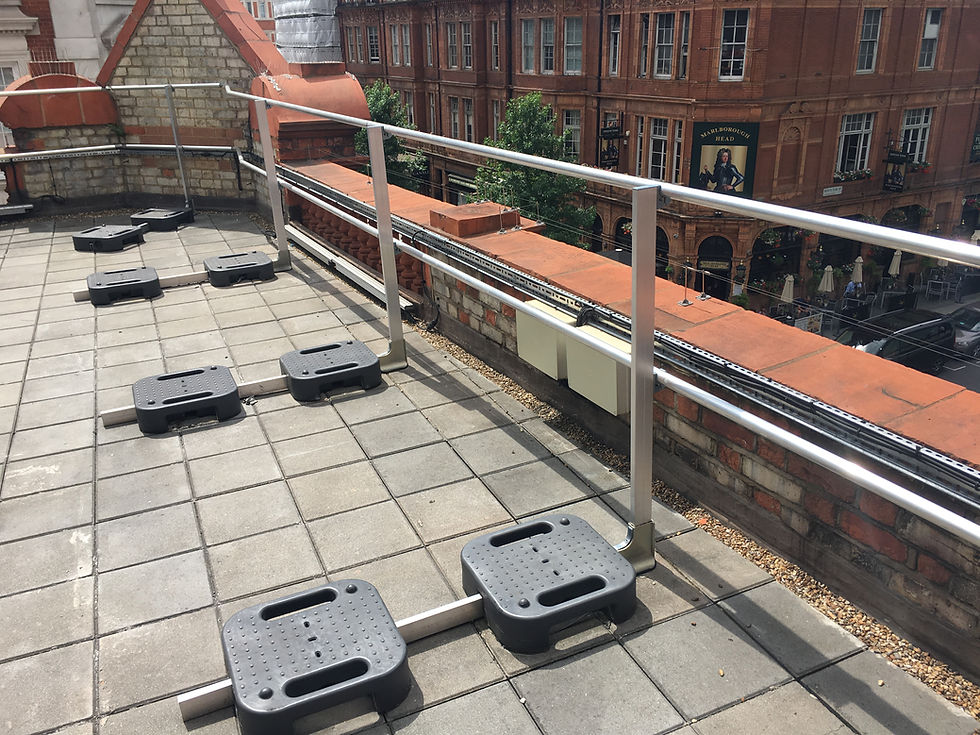
Freestanding or fixed edge protection handrails should be checked for secure base fixings (particularly on non-penetrative, counterweighted roof systems, where ballast and base plate condition are as important as the rail itself), and for continuity of protection along the full length of the route.
Fixed Vertical Safety Ladders
Fixed vertical ladders should be checked for correct rung spacing, secure wall or structure fixings, and — where fitted — the condition of any integrated fall arrest rail, ensuring the connection point travels smoothly along its full length without obstruction.
Beyond the hardware: supporting considerations
A complete mansafe PPM plan should also account for:
Access Route Planning
The wider access route to and from mansafe systems — including any temporary access equipment, roof walkways, and demarcated safe zones — should be reviewed alongside the fall protection system itself to confirm the full journey to a work area remains safe.
User Training and Competency Records
While not a PPM task in itself, an effective programme should be paired with confirmation that anyone using the system holds current training and competency records, and that rescue plans are in place in the event of a fall being arrested.
Documentation and Asset Registers
Given that mansafe systems are often spread across multiple roof levels and plant areas, a clear asset register recording system type, location, last inspection date, and certification status is essential for planning future inspections and demonstrating compliance.
Building a PPM schedule that works
An effective mansafe PPM programme typically combines:
1
Annual inspection & re-certification
carried out by a competent, trained inspector in line with BS 7883, BS EN 795, and manufacturer requirements
2
Pre-use visual
checks
by users before each occasion the system is relied upon, supporting the formal annual inspection regime
3
Prompt remedial action
on any defects identified, with the system taken out of use until repairs are completed and verified
4
Full documentation
inspection certificates, asset registers, and remedial action records - retained and accessible for Work at Height Regulations and PUWER compliance
The bottom line
Mansafe system PPM for commercial premises exists to ensure that the equipment protecting people during work at height performs exactly as intended, every single time it’s relied upon. From anchor point testing and latchwire tensioning through to handrail fixings and fixed ladder inspection, every element plays a part in enabling safe access to roofs and plant areas.
A well-planned, professionally delivered maintenance programme reduces the risk of fall protection failure, supports your duties under the Work at Height Regulations 2005 and PUWER 1998, and gives you confidence that anyone accessing height on your premises is properly protected.
For a tailored mansafe PPM schedule for your premises, get in touch with our height safety and compliance team.