Our Services
Fire Alarm PPM for
commercial premises
Why Fire Alarm PPM matters
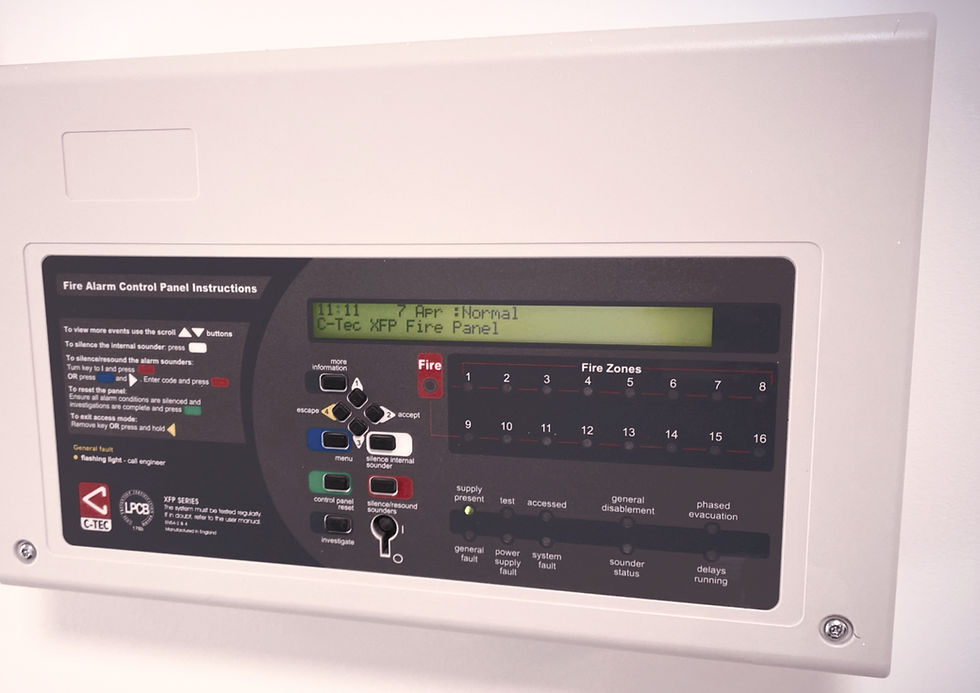
Fire alarm systems rely on a network of interdependent components — detectors, call points, panels, sounders, and interfaces — all of which must function correctly and in the right sequence to provide effective early warning. A single faulty detector, a discharged battery, or a misconfigured zone can mean the difference between prompt detection and a delayed response.
The legal framework is clear. The Regulatory Reform (Fire Safety) Order 2005 (RRO) places a duty on the “responsible person” for non-domestic premises in England and Wales to ensure general fire precautions are adequate, including the maintenance of fire detection and warning systems in efficient working order. Equivalent duties apply under the Fire (Scotland) Act 2005 and the Fire and Rescue Services (Northern Ireland) Order 2006. The recognised technical standard for the design, installation, commissioning, and maintenance of fire detection and alarm systems is BS 5839-1 (for non-domestic premises), which sets out recommended inspection and servicing frequencies and scope.
Failure to maintain a compliant, functioning fire alarm system can result in enforcement notices, prosecution, and — in the event of an incident — a direct impact on life safety and business continuity. Insurers will also typically expect evidence of a current maintenance regime and service records as a condition of cover.
Core fire alarm PPM tasks
A comprehensive fire alarm PPM programme in line with BS 5839-1 typically includes:
Weekly user test
A manual test of one call point (in rotation) by a nominated responsible person, confirming the panel receives the signal and sounders operate correctly
Quarterly inspection and testing
Carried out by a competent engineer, checking a sample of detectors and call points, battery condition, panel event logs, and system fault history
Annual full system service
Testing every detector and call point, verifying sounder audibility throughout the building, checking cause-and-effect programming, and confirming interfaces with other systems (door releases, AHU shutdown, lift homing) operate correctly
Battery testing and replacement
Checking standby battery capacity and voltage, replacing batteries at manufacturer-recommended intervals to ensure backup power during a mains failure
Detector sensitivity testing and cleaning
Removing dust and contamination that can cause false alarms or reduce detector responsiveness
Panel and network diagnostics
Checking control panel software, network communication between panels (on networked systems), and event log review for recurring faults
False alarm management
Reviewing false alarm history and investigating root causes, as excessive false alarms can lrsad to complacency and, in some areas, fire service call-out charges


Interfaces, integration, and supporting systems
A fire alarm rarely operates entirely in isolation, and PPM should account for how it interacts with — and depends on — other building systems:
Detection Devices
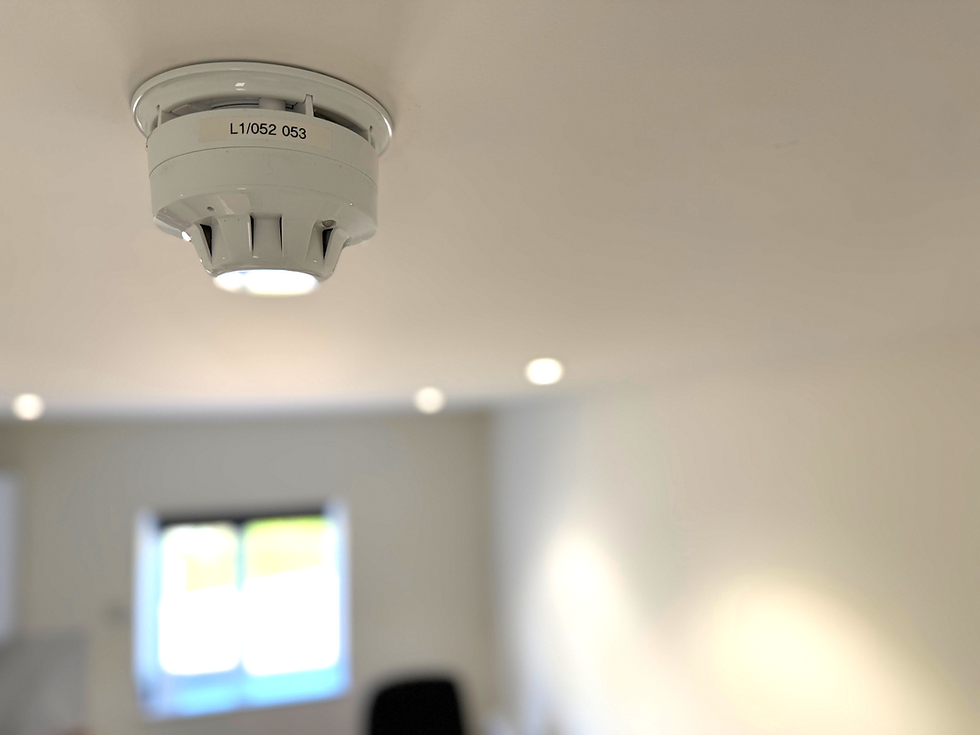
Smoke, heat, and multi-sensor detectors should be checked for correct type and placement relative to their environment, sensitivity calibration, and any signs of contamination, damage, or obstruction that could delay detection.
Sounders, Beacons, and Voice Alarm (VA) Systems
Audible and visual warning devices should be tested for correct operation and audibility across all areas, including plant rooms, stairwells, and areas with high ambient noise; where a voice alarm system is fitted, message clarity and amplifier function should also be verified.
Interfaced Systems
Fire alarm systems frequently interface with access control (door release), air handling units (fan shutdown), lift homing, and gas shut-off valves — these cause-and-effect functions should be tested as part of the annual service to confirm they trigger correctly during an alarm condition.
Standby Power Supplies
Beyond the panel’s internal batteries, any separate standby power supplies or uninterruptible power supply (UPS) arrangements protecting the fire alarm system should be checked to confirm they will maintain system operation during a mains outage.
Cabling and Containment
Fire alarm cabling should be inspected for physical damage and, where fire-rated cable is required, checked for correct routing and fire-stopping at compartment penetrations to maintain the system’s integrity during a fire.
Zone Plans and Documentation
Zone plans displayed at the control panel should be checked to confirm they accurately reflect the current building layout — a detail easily overlooked after refurbishment or reconfiguration, but critical for an effective response.
Building a PPM schedule that works
An effective fire alarm PPM programme typically combines:
1
Weekly in house testing
carried out by a nominated responsible person, with results logged in the fire safety logbook
2
Quarterly and annual servicing
carried out by a competent, third-party accredited engineer in line with BS 5839-1
3
Ongoing false alarm monitoring
to identify and resolve recurring issues before they undermine confidence in the system
4
Full documentation
service certificates, event logs, and the fire safety logbook - retained and accessible for RRO compliance and insurance purposes
The bottom line
Fire alarm PPM for commercial premises is about far more than an annual box-tick — it’s the assurance that, in an emergency, every detector, sounder, and interface will do exactly what it’s designed to do. From weekly testing through to full annual servicing and interface checks, every element plays a part in reliable early warning.
A well-planned, professionally delivered maintenance programme reduces the risk of system failure and false alarms, supports your duties under the Regulatory Reform (Fire Safety) Order, and gives you confidence that your fire alarm system will perform when it matters most.
For a tailored fire alarm PPM schedule for your premises, get in touch with our fire safety and compliance team.