Our Services
Fire Damper PPM for
commercial premises
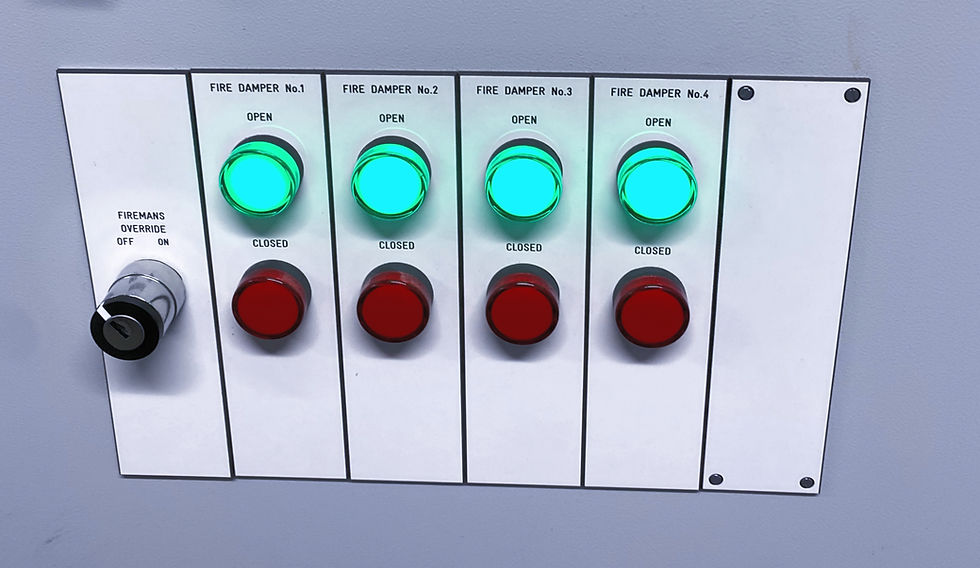
Why Fire Damper PPM matters
Fire alarm systems rely on a network of interdependent components — detectors, call points, panels, sounders, and interfaces — all of which must function correctly and in the right sequence to provide effective early warning. A single faulty detector, a discharged battery, or a misconfigured zone can mean the difference between prompt detection and a delayed response.
The legal framework is clear. The Regulatory Reform (Fire Safety) Order 2005 (RRO) places a duty on the “responsible person” for non-domestic premises in England and Wales to ensure general fire precautions are adequate, including the maintenance of fire detection and warning systems in efficient working order. Equivalent duties apply under the Fire (Scotland) Act 2005 and the Fire and Rescue Services (Northern Ireland) Order 2006. The recognised technical standard for the design, installation, commissioning, and maintenance of fire detection and alarm systems is BS 5839-1 (for non-domestic premises), which sets out recommended inspection and servicing frequencies and scope.
Failure to maintain a compliant, functioning fire alarm system can result in enforcement notices, prosecution, and — in the event of an incident — a direct impact on life safety and business continuity. Insurers will also typically expect evidence of a current maintenance regime and service records as a condition of cover.
Core fire damper PPM tasks
A comprehensive fire damper PPM programme in line with BS 9999 typically includes:
Annual damper testing
The industry-recognised standard interval (unless manufacturer guidance or risk assessment indicates otherwise), confirming each damper closes fully and correctly under test conditions
Access panel inspection and reinstatement
Locating, opening, and safely reinstating ceiling and duct access panels to reach each damper, ensuring access remains available for future testing
Blade and actuator operation checks
Confirming damper blades move freely through their full range without obstruction, and that actuators, springs, and closing mechanisms function correctly
Fusible link inspection (on mechanically operated dampers)
Checking fusible links are correctly fitted, undamaged, and rated appropriately for the application
Electrical and control testing (on motorised dampers)
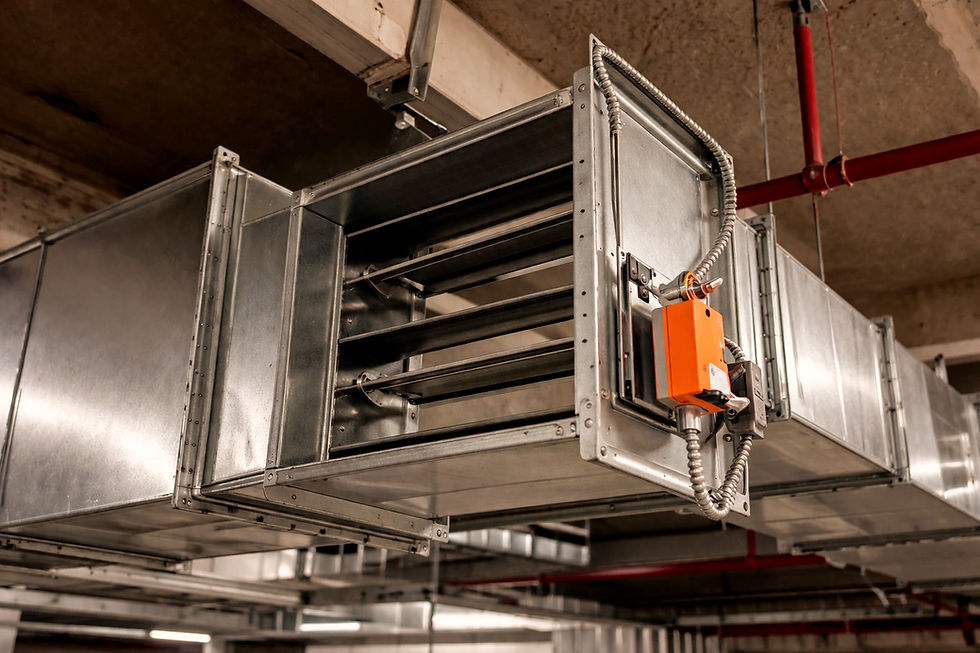
Verifying correct response to fire alarm signals or dedicated smoke/heat detection, including confirmation of end-switch feedback where fitted
Damper case and duct connection inspection
Checking for corrosion, damage, or gaps around the damper casing and its connection to surrounding ductwork that could compromise fire resistance
Reset and re-test after activation
Confirming dampers can be safely reset following a test or genuine activation, and re-testing to confirm correct operation
Labelling and asset register updates
Ensuring each damper is clearly labelled and recorded on an asset register with test history, location, and access details
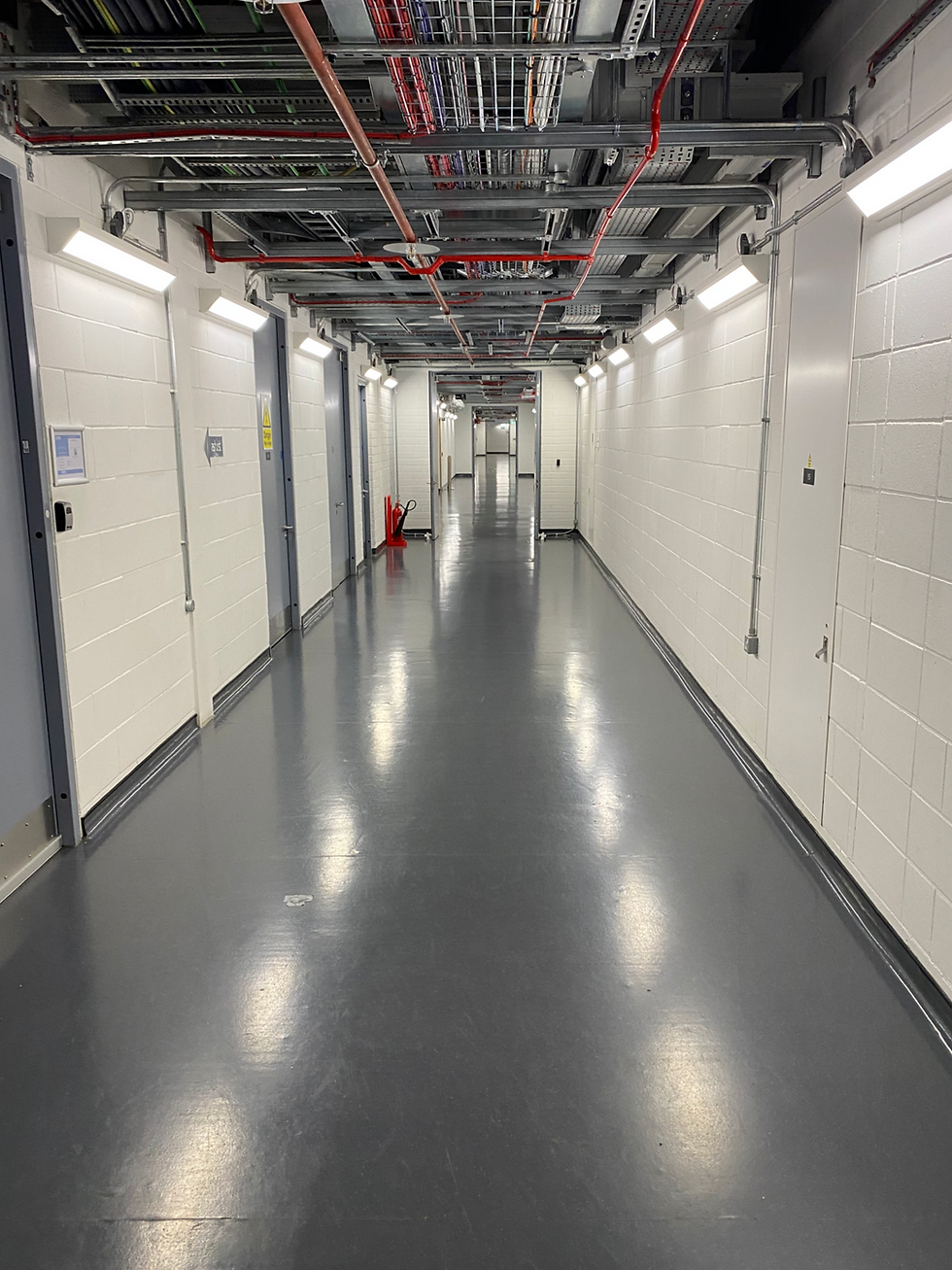
Beyond the damper itself: supporting considerations
Fire damper compliance depends on more than the damper unit alone, and a complete PPM plan should also account for:
Compartment Line Integrity
The wall or floor through which the damper passes should be inspected to confirm fire-stopping around the duct penetration remains intact, as gaps here can undermine compartmentation even where the damper itself is fully functional.
Ductwork Condition
Ductwork immediately surrounding each damper should be checked for damage, incorrect support, or modifications made during other works that could affect the damper’s ability to close fully or maintain its fire rating.
Fire Alarm and BMS Interfaces
On motorised dampers linked to the fire alarm system or Building Management System, the interface should be tested as part of both the damper and fire alarm PPM regimes, confirming activation signals are received and acted upon correctly.
Access and Ceiling Void Management
Because testing requires physical access, PPM planning should account for ceiling tile removal, riser access, and reinstatement, and should be coordinated with other planned works to avoid dampers becoming obstructed by storage, cabling, or subsequent fit-out.
Documentation and Traceability
Given the number of dampers typically present in a commercial building and their hidden locations, a clear asset register with unique references, floor plans, and test history is essential for demonstrating ongoing compliance and directing future access efficiently.
Building a PPM schedule that works
An effective fire damper PPM programme typically combines:
1
A full damper
survey
to establish an accurate asset register, locations, and access requirements - particularly important where existing records are incomplete
2
Annual testing
carried out by a competent engineer in line with BS 9999 and manufacturer guidance
3
Coordinated access planning
aligning damper testing with other ceiling void or riser access works where possible to reduce disruption
4
Full documentation
test certificates, asset registers, and remedial action records - retained and accessible for RRO compliance and fire risk assessment review
The bottom line
Fire damper PPM for commercial premises protects a part of the building’s fire strategy that’s easy to forget precisely because it’s designed never to be seen in normal operation. From locating and accessing each damper through to testing blade movement, actuators, and fire alarm interfaces, every element plays a part in preserving compartmentation when it matters most.
A well-planned, professionally delivered maintenance programme reduces the risk of undetected damper failure, supports your duties under the Regulatory Reform (Fire Safety) Order, and gives you confidence that your building’s passive fire protection will perform as designed.
For a tailored fire damper PPM schedule for your premises, get in touch with our fire safety and compliance team.