Our Services
Emergency Lighting PPM for commercial premises
Why Emergency Lighting PPM matters
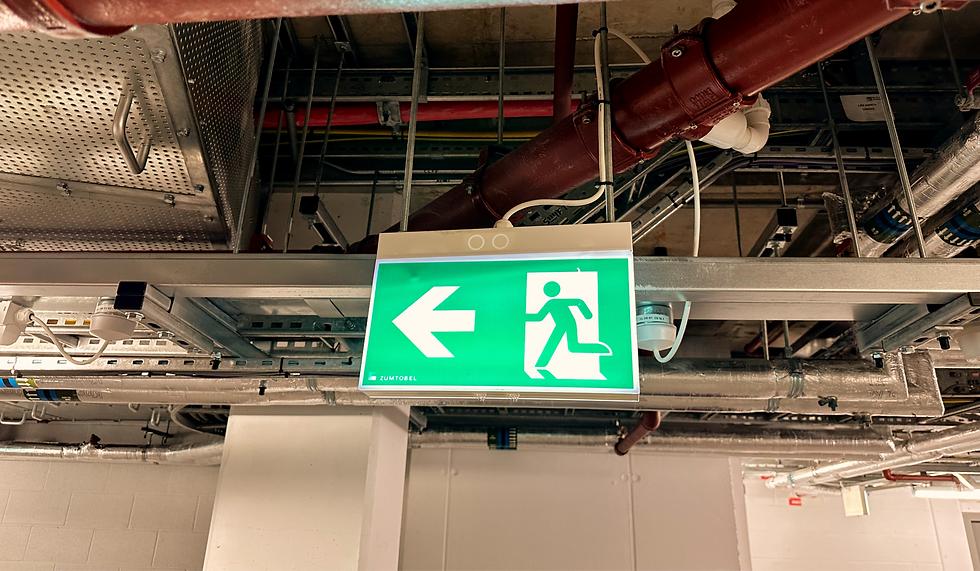
Emergency lighting systems depend on batteries, charging circuits, and lamps that degrade over time, often without any visible sign under normal conditions. A luminaire can appear to be working perfectly when illuminated by its test switch, yet fail to provide its full rated duration during an actual power failure — which is precisely why routine, documented testing is so important.
The legal framework is well established. The Regulatory Reform (Fire Safety) Order 2005 (RRO) places a duty on the “responsible person” for non-domestic premises in England and Wales to ensure emergency routes and exits are provided with emergency lighting of adequate intensity, and that it is maintained in efficient working order. Equivalent duties apply under the Fire (Scotland) Act 2005 and the Fire and Rescue Services (Northern Ireland) Order 2006. The recognised technical standard is BS 5266-1, which sets out the design, installation, and — critically — the testing and maintenance regime expected for emergency lighting systems, supported by BS EN 1838 for lighting performance requirements.
Failure to maintain a compliant, functioning emergency lighting system can result in enforcement action and, in the event of a real power failure or fire, directly compromise safe evacuation. Insurers will also typically expect evidence of a current testing and maintenance regime as a condition of cover.
Core emergency lighting PPM tasks
A comprehensive emergency lighting PPM programme in line with BS 5266-1 typically includes:
Monthly function testing
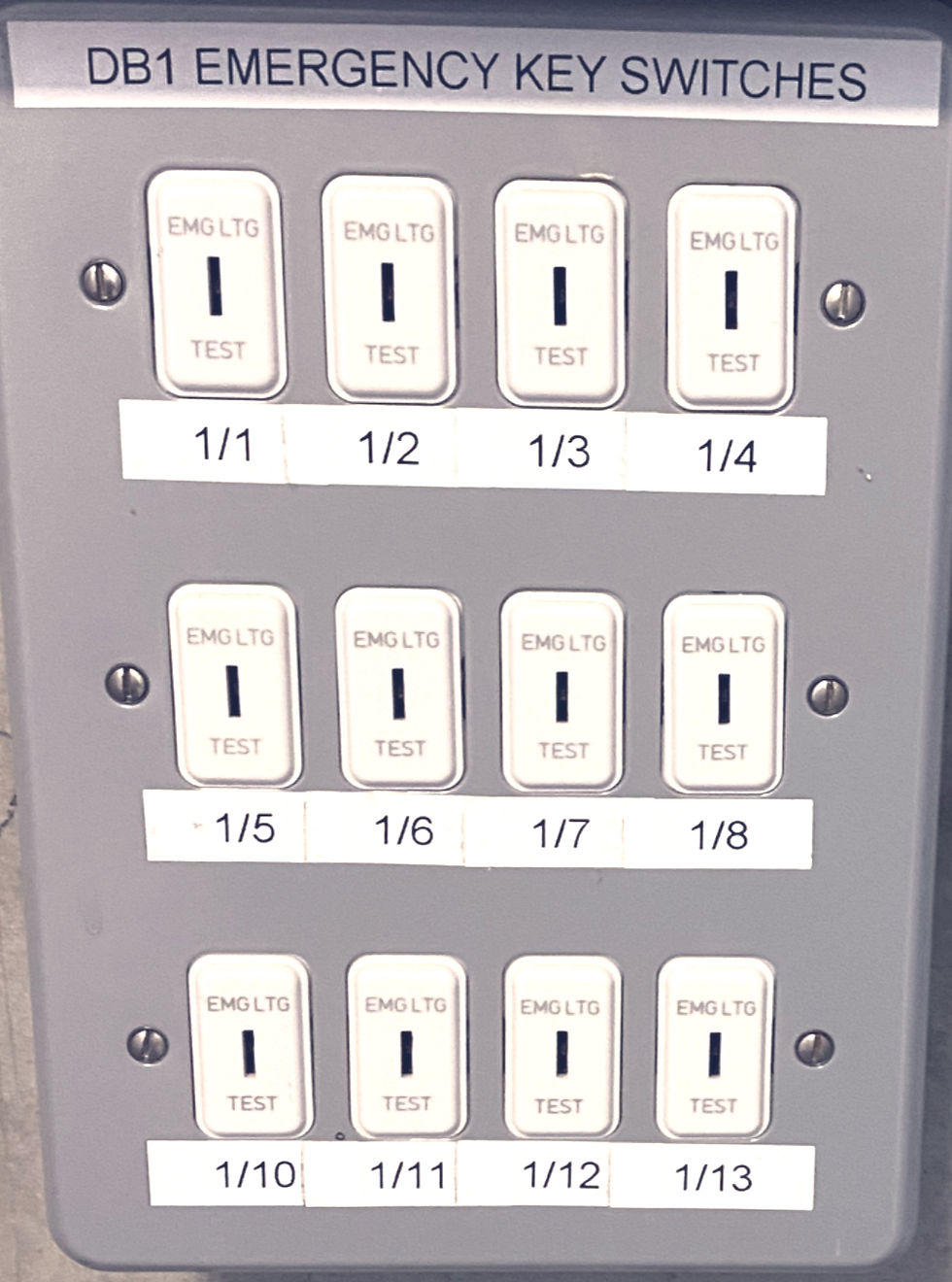
A brief test of each luminaire (using a key switch, test button, or central test system) to confirm it illuminates correctly, with any faults recorded and rectified
Annual full duration test
A complete discharge test simulating a mains failure, confirming every luminaire operates for its full rated duration (typically 3 hours in most commercial premises), carried out by a competent engineer
Battery condition checks
Inspecting for swelling, leakage, or reduced capacity, and replacing batteries at manufacturer-recommended intervals to ensure full duration performance is maintained
Lamp and LED inspection
Checking output levels and replacing failed or degraded light sources that could compromise the required illumination levels along escape routes
Charging circuit checks
Confirming charging indicators are functioning and batteries are recharging correctly following a discharge test
Central battery system checks (where fitted)
Testing the central battery unit, distribution circuits, and changeover mechanisms, along with confirming fire-rated cabling is intact where required
Illumination level verification
Spot-checking lux levels along escape routes and at specific risk points against BS EN 1838 requirements, particularly following any layout changes
Signage and luminaire condition checks
Confirming fittings are undamaged, correctly positioned, and unobstructed by later fit-out works, storage, or partitioning
Coverage, integration, and supporting considerations
Emergency lighting compliance depends on more than the luminaires themselves, and a complete PPM plan should also account for:
Escape Route Coverage
Escape routes, stairwells, and final exits should be checked to confirm continuous coverage with no gaps in illumination, paying particular attention to changes in direction, level changes, and fire safety equipment locations that require specific illumination under BS 5266-1.
Open Areas and High-Risk Task Areas
Larger open-plan spaces (anti-panic lighting) and areas where hazardous processes or tasks continue during a power failure (high-risk task area lighting) have their own specific illumination requirements that should be verified as part of the PPM regime.
Central Battery Systems and Sub-Distribution
Where a central battery system feeds multiple luminaires, sub-distribution boards, changeover relays, and fire-rated cable runs should be checked to confirm the system will maintain supply to all served areas during a mains failure.
Self-Contained vs Central Systems
The PPM approach should reflect the system type installed — self-contained luminaires each carry their own battery and require individual testing, while central battery or central power supply systems require testing at both the central unit and the individual luminaire level.
Signage and Wayfinding
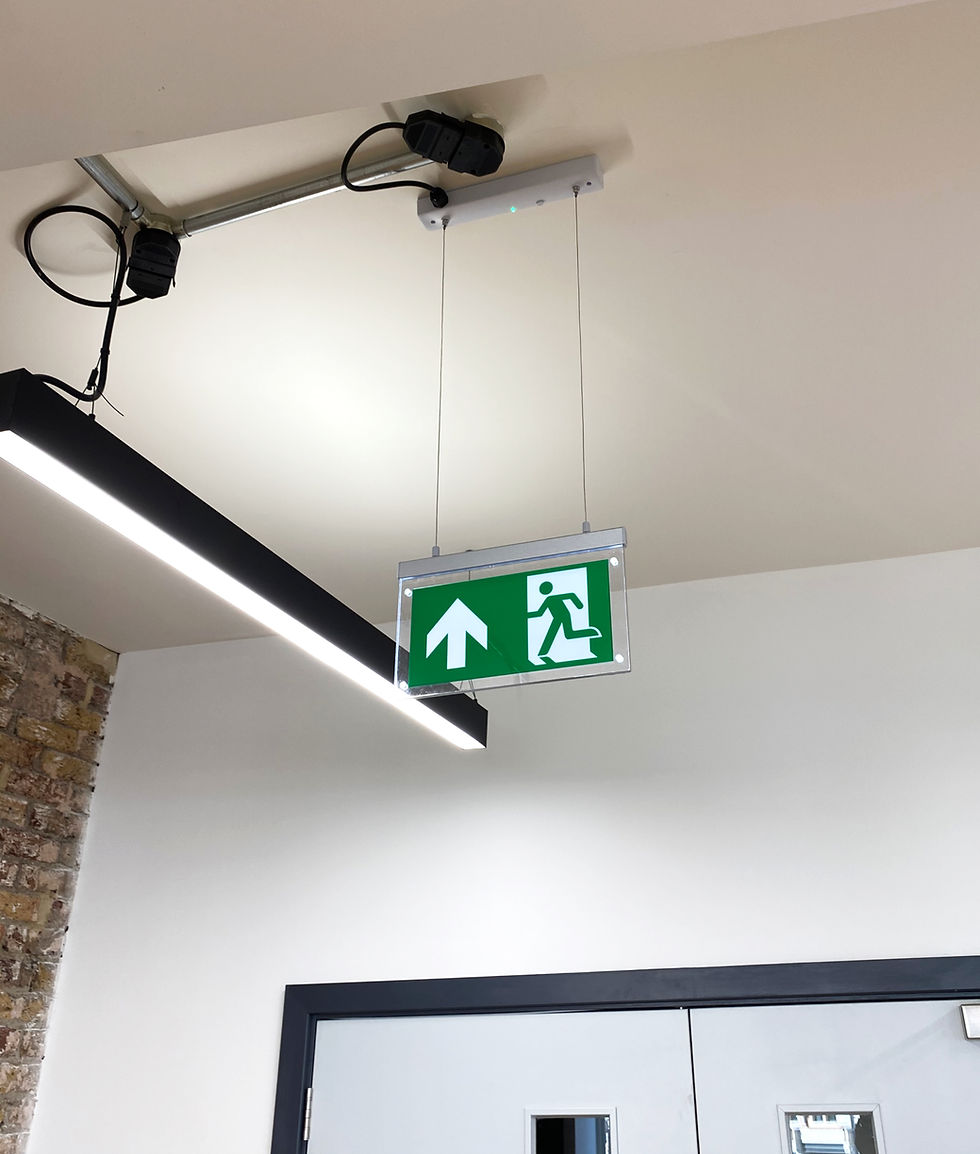
Illuminated and non-illuminated exit signage should be checked alongside emergency lighting to confirm signage remains visible, correctly positioned, and consistent with the current escape route layout.
Logbook and Test Record Integration
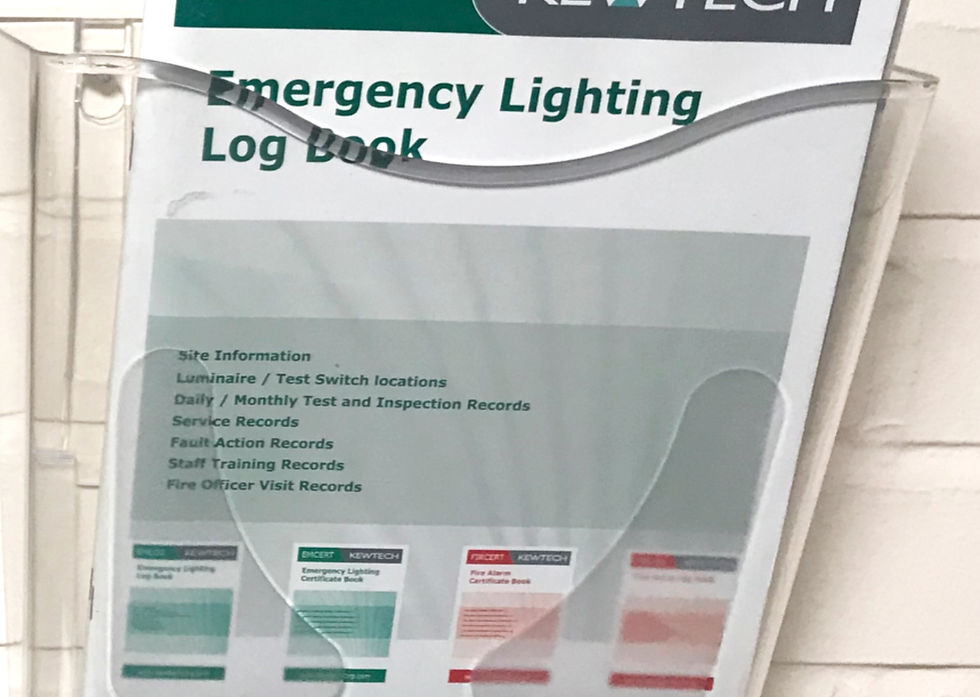
Test results should be integrated with the building’s fire safety logbook, providing a clear, auditable history that supports both RRO compliance and any future fire risk assessment review.
Building a PPM schedule that works
An effective emergency lighting PPM programme typically combines:
1
Monthly function testing
carried out in-house or by a contractor, with results logged in the fire safety logbook
2
Annual full duration testing
carried out by a competent engineer in line with BS 5266-1
3
Condition-based battery and lamp replacement
based on manufacturer guidance and test findings
4
Full documentation
test certificates, logbook entries, and remedial action records - retained and accessible for RRO compliance and insurance purposes
The bottom line
Emergency lighting PPM for commercial premises is about ensuring a system that’s rarely relied upon will work perfectly the one time it truly matters. From monthly function checks through to full annual duration testing, every element plays a part in keeping escape routes safe and visible.
A well-planned, professionally delivered maintenance programme reduces the risk of system failure during a real emergency, supports your duties under the Regulatory Reform (Fire Safety) Order, and gives you confidence that your building can be safely evacuated whatever the circumstances.
For a tailored emergency lighting PPM schedule for your premises, get in touch with our fire safety and compliance team.